Material · Madagascar
Madagascar raffia
A natural fibre from the Raphia farinifera palm, harvested in Madagascar, Madagascar raffia is the reference material for high-end woven accessories. SOBIKA, a workshop in Antananarivo, masters its crochet, braiding and weaving techniques.
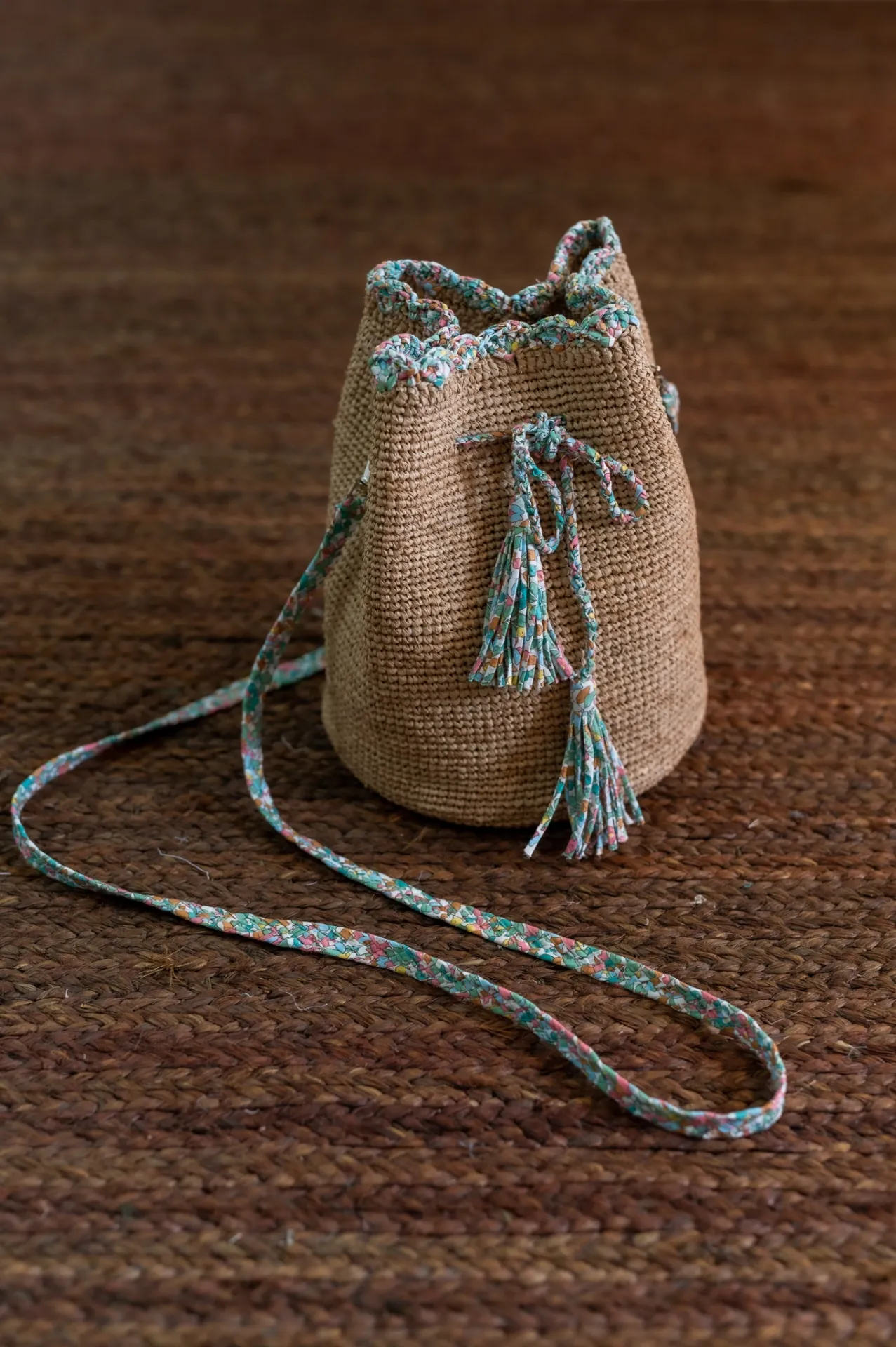
Origin & material
Raffia is extracted from the young leaves of the Raphia farinifera palm. The palm grows in Madagascar, tropical Africa and the Comoros, but Madagascar concentrates the craft supply chain. The island produces most of the world's natural raffia used in craft and fashion.
The resulting fibre is supple, long, lightweight and naturally strong. It lends itself to braiding, weaving and crochet, and accepts both natural and contemporary dyes.
Botany & producing regions
The Raphia farinifera palm grows naturally in the wet zones of eastern and north-eastern Madagascar. It reaches up to 20 metres tall and produces the longest compound leaves in the plant kingdom — up to 25 metres — from which the fibre is extracted. Harvesting is historically concentrated in the Sava, Analanjirofo, Alaotra-Mangoro and Atsinanana regions, where the humid tropical climate promotes palm maturity and fibre length.
Each palm reaches full production between 8 and 12 years. Only the young central leaves — still folded — are cut: they hold the finest, most even and whitest fibre. The practice preserves the tree, which keeps producing for 30 to 40 years, and maintains the local forest ecosystem.
The Malagasy raffia chain supports tens of thousands of rural families: collectors, strippers, dryers, sorters and hauliers. It is a major economic sector in producing regions, structured around local cooperatives and traders who route the fibre to Antananarivo workshops.
Raffia vs jute, penjy, rabane
Raffia is often confused with other natural fibres. Jute — from a herbaceous plant grown in South Asia — is coarser, more brittle and less luminous; it suits rope-making, not fine weaving. Rabane is a fabric woven on a loom from raffia, but it is a finished product, not a raw material. Penjy in Madagascar refers to a rush or raffia mat, used for placemats and flat baskets.
Madagascar raffia stands apart by its length (up to 2 usable metres without a splice), gauge consistency, dry suppleness and natural sheen. These four properties make it the only plant fibre able to sustain the fine crochet of structured bags and shaped hats.
Harvest & preparation
Young leaves are cut by hand so the palm — which keeps producing for decades — is not damaged. Each leaf is then stripped, sun-dried, and sorted by length and gauge.
This entirely manual preparation determines the final quality of the piece: even grain, weave hold, natural sheen of the fibre.
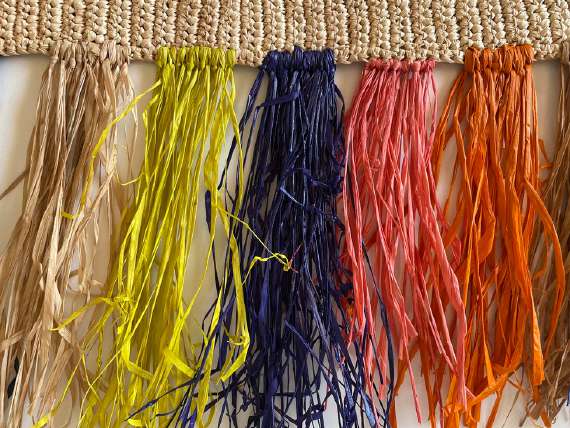
Techniques: crochet, braiding, weaving
Crochet — each stitch is formed by hand with a fine hook. It is the master technique for structured bags, hats and accessories with crisp finishes.
Braiding — multiple raffia strands are interlaced into a flat braid. Ideal for totes, placemats and strap webbing.
Weaving — the fibre is stretched on a frame and woven. The result is a supple or structured panel depending on the weave chosen.
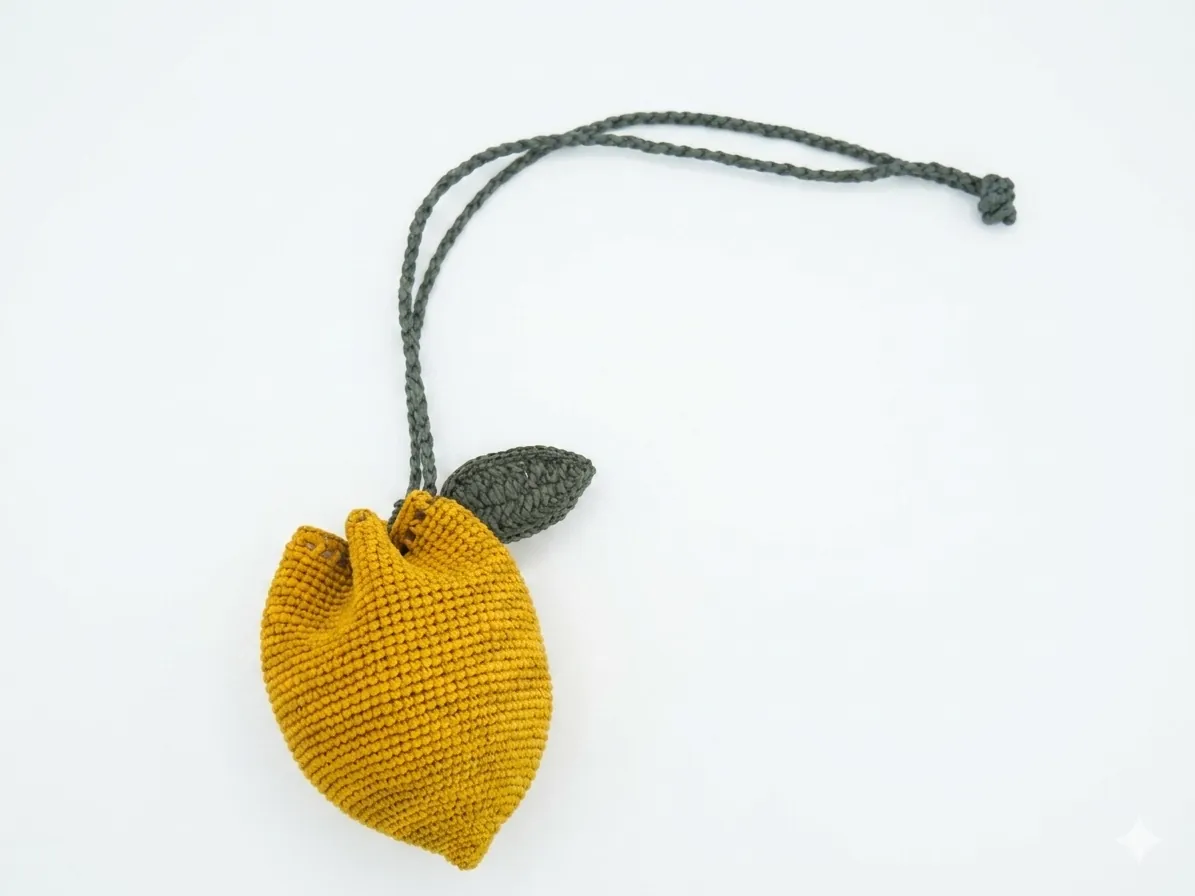
Why Madagascar
Three factors converge in Madagascar: a climate that fosters mature, productive palms, a longer and more even fibre than elsewhere, and an artisanal ecosystem — concentrated around Antananarivo — that has passed the gesture down for generations.
This context is what allows a workshop like SOBIKA to meet finishing standards compatible with the demands of European premium brands.
Quality & sustainability
Raffia is 100% natural, renewable and biodegradable. Harvesting does not kill the palm — only young leaves are taken, ensuring continuous production and a low environmental footprint.
SOBIKA is backed by the LOI Confection factory, which is covered by the WRAP, ICS and BSCI frameworks. These frameworks do not certify raffia or every SOBIKA product.
Madagascar raffia bags
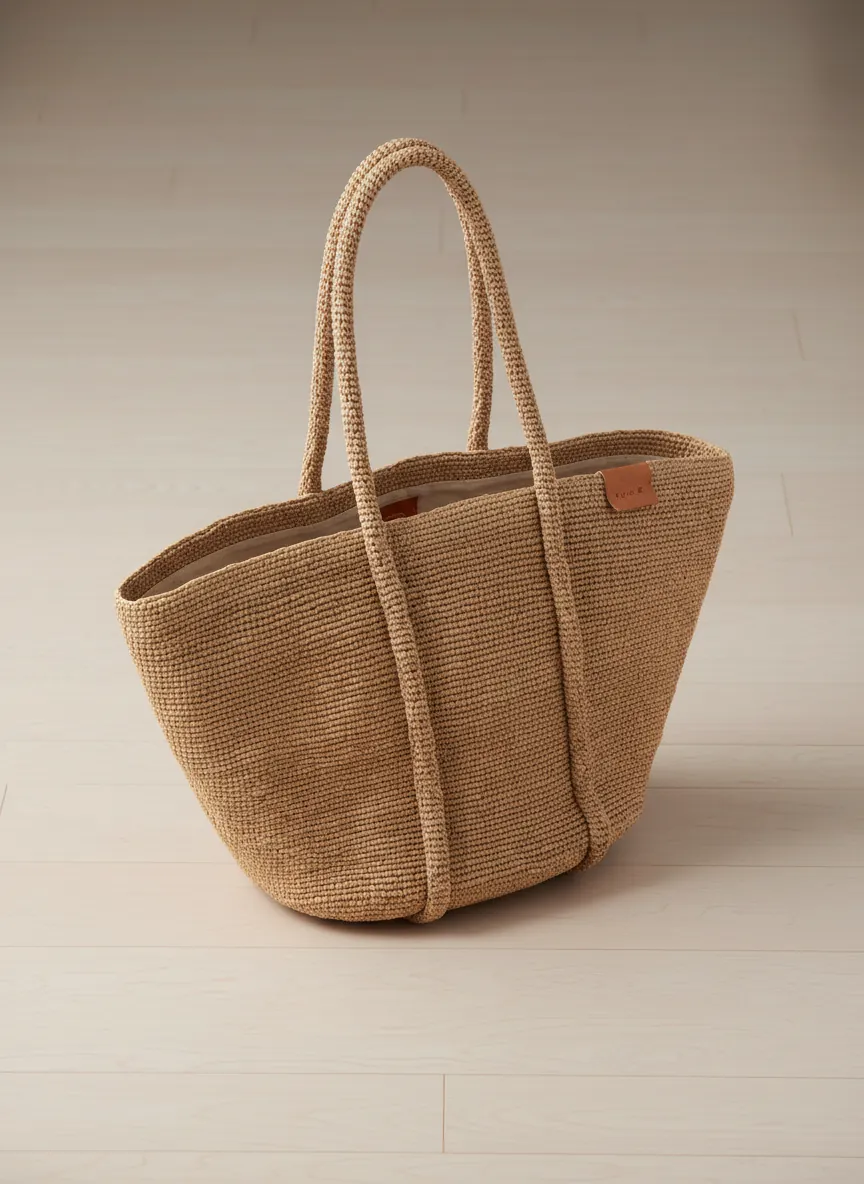
Madagascar raffia bags hold their shape thanks to consistent crochet and high-grade fibre. SOBIKA develops bucket bags, totes, crossbody and pouch shapes — sizes, leather or raffia straps, linings and closures built to spec.
From prototype to small runs, the workshop works B2B with premium brands looking for a reliable Madagascar raffia bag manufacturer on lead time and finish.
Madagascar raffia hats
Wide-brim, bucket, panama, visor: a Madagascar raffia hat is light, breathable and holds its shape. Crochet allows soft or structured brims, high or low crowns, and raffia or fabric trims.
Each model is developed from a drawing or client prototype, then fitted on wooden hat blocks at the workshop to ensure run consistency.
Crocheted accessories & bespoke pieces
Beyond bags and hats, SOBIKA produces in crochet and braiding: pouches, belts, placemats, baskets, charms, embroidered applications on textile. Any raffia-buildable piece is studied by our development team.
In-house trained artisans master fine crochet techniques, opening the door to capsule collections, limited editions and continuous production runs.
The SOBIKA workshop
SOBIKA is the raffia workshop of the LOI Confection group, based in Antananarivo (Madagascar). The team develops and manufactures bags, hats, pouches and upcycled pieces for premium lifestyle brands, from prototype to production.
Frequently asked questions
- What is Madagascar raffia?
- Madagascar raffia is a plant fibre extracted from the young leaves of the Raphia farinifera palm, native to Madagascar, tropical Africa and the Comoros. Supple, light, strong and fully biodegradable, it has been used for centuries to braid, weave and crochet accessories and textiles.
- Why is Madagascar raffia the world reference?
- Madagascar accounts for most of the world's quality natural raffia production. The island's climate, the maturity of its palms and the local artisanal know-how — concentrated around Antananarivo — yield a longer, more even and stronger fibre than other origins.
- How is raffia harvested and prepared?
- Young leaves are hand-cut and stripped to extract the fibre, which is then sun-dried, sorted by length and gauge, and optionally dyed with natural pigments before being delivered to the workshop for braiding, weaving or crochet.
- Which techniques does the SOBIKA workshop master?
- SOBIKA, based in Antananarivo, works raffia in crochet (bags, hats, accessories), braiding (totes, placemats) and weaving (structured panels and pieces). Every piece is handcrafted by trained artisan women.
- Is Madagascar raffia sustainable?
- Yes. Untreated raw raffia fibre is natural, renewable and biodegradable. Harvesting does not kill the palm — only young leaves are picked. SOBIKA raffia is not covered by any organic textile certification.
- What is the difference between natural Madagascar raffia and synthetic raffia?
- Madagascar raffia is a 100% natural, biodegradable fibre from a renewable resource. Synthetic raffia is an extruded plastic that imitates the look but lacks the suppleness, patina and perceived value of the natural fibre.
- What are SOBIKA's MOQs (minimum order quantities)?
- MOQs depend on the complexity of the piece and the type of collaboration: from a single prototype for creative validation to runs of several thousand units. They are discussed case by case with our commercial team.
- What are the lead times for a raffia collection?
- Plan for 4 to 8 weeks for a validated prototype, and 8 to 14 weeks for a full production run, excluding transport from Antananarivo (Ivato airport) or the port of Toamasina.
- How do I order a Madagascar raffia collection?
- SOBIKA works B2B with premium and lifestyle brands, from prototype to production. Contact our commercial team with your brief — we reply with a quote within 24 business hours.
A Madagascar raffia collection to develop?
Let's talk about your brief — quote within 24 business hours.