Material
Raffia, jute, straw, rabane: a comparative guide to natural fibres
Published on · 9 min read
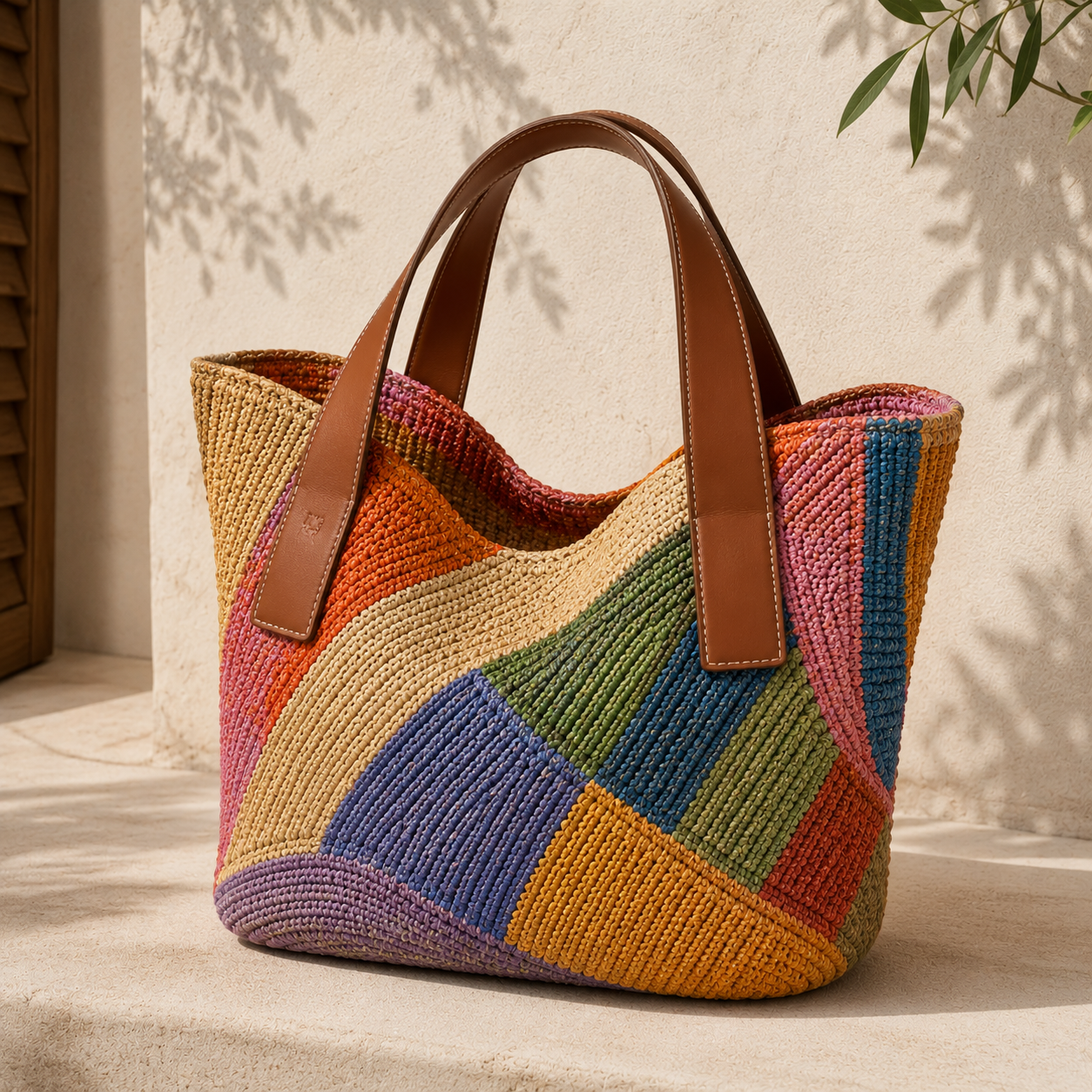
Comparing raffia, jute, straw and rabane before launching an accessory collection: origin, fibre length, suppleness, sheen and uses.
An art direction preparing a woven-accessory collection quickly runs into fibre vocabulary: raffia, jute, straw, rabane, sisal, penjy. The first four look similar, but they don't behave the same way in crochet, braiding or production. This guide compares the four materials most used in fashion and accessories.
Madagascar raffia
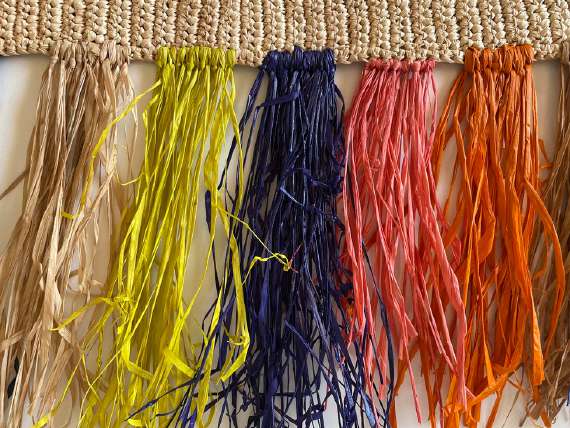
Raffia is the fibre extracted from the young leaves of the Raphia farinifera palm, harvested in Madagascar. Its usable length reaches 2 metres, allowing a whole bag to be crocheted without a visible splice. Supple when dry, glossy and even, it takes both natural and contemporary dyes. It is the only plant fibre that holds the fine crochet of a structured bag or a shaped hat without losing its stand.
Jute
Jute comes from a herbaceous plant grown mainly in Bangladesh and India. It is a short, coarse fibre, brittle when dry, and its irregular grain takes light dyes poorly. It excels in ropes, utility sackcloth and packaging liners. In fashion accessories, jute delivers a deliberately rustic finish — not the finish expected by a premium house.
Natural straw (wheat, rye, paper)
Straw — wheat, rye, or braided paper straw such as Panama — is hollow and brittle when dry. It dominates European hat-making (canotiers, Panamas) but snaps under fine crochet and creases at corners. Its suppleness comes from steaming, never permanent. Useful for a hat, unsuitable for a bag.
Rabane
Rabane is not a raw material but a fabric: raffia strands woven on a loom into a supple panel. It is used for tablecloths, wall hangings, wall panels, or cut into flat pieces (pouches, placemats). It doesn't compete with crocheted raffia — it's a derivative, complementary, useful when a project calls for a woven raffia cloth rather than a crocheted mesh.
How to choose
- Structured bag or bespoke piece: Madagascar crocheted raffia.
- Shaped hat: straw (Panama, boater) or braided raffia.
- Glossy fabric panel, tablecloth, hanging: rabane (woven raffia).
- Rustic utility bag, silkscreened tote: jute.
SOBIKA, a workshop in Antananarivo, works Madagascar raffia in crochet, braiding and weaving, and combines it with other materials (leather, cotton, linen) through the LOI Confection textile chain. For a precise accessory brief, the team recommends the right fibre and technique before quoting.
Read next