Material
Natural raffia dyes: 24 lasting shades born of the Malagasy flora
Published on · 12 min read
Dye plants, dye baths, fixation: how SOBIKA produces 24 stable natural shades on raffia fibre, with no chemicals.
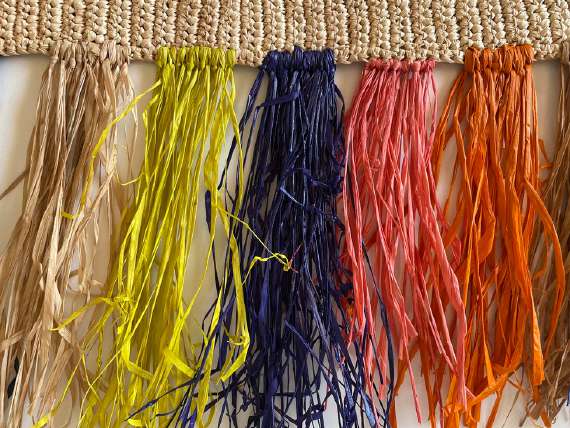
A raffia bag's colour tells the story of its land. In Madagascar the flora offers an exceptionally rich dye palette: indigo, turmeric, hibiscus, mango and avocado leaves, eucalyptus bark, oak gall. In the SOBIKA workshop these natural resources — all sourced outside protected species — are used to produce 24 stable shades, with no synthetic dyes, for luxury houses that demand character, traceability and lower impact.
Madagascar's main dye plants
- Indigo (Indigofera tinctoria) — deep to powder blues.
- Turmeric — solar yellows and warm oranges.
- Eucalyptus bark and plant tannins — pinks, terracotta, browns.
- Hibiscus and bissap — reds, fuchsia, mauves.
- Mango and avocado leaves — olive and sage greens.
- Plant ash and oak gall — greys, blacks, mineral tones.
A four-step dyeing process
1. Preparing the fibre
Raw raffia is scoured in hot water to open the fibre. This step controls absorbency — and therefore the depth of the final colour.
2. Mordanting
A mineral mordant bath (potassium alum, iron salts or plant tannin) anchors pigments to the fibre and guarantees colour fastness to washing and light.
3. Dye bath
The dye plant is hot-extracted, then the raffia is immersed for 30 minutes to 6 hours depending on the target shade. For indigo blues we use successive open-air oxidation baths: each dip deepens the colour.
4. Fixation and drying
A final fixation bath followed by 48 hours of shade-drying stabilises the shade. No artificial heat is used, which preserves the fibre's suppleness.
Why natural costs more (and is worth it)
Natural dyeing takes 3 to 5 times longer than standard chemical dyeing and imposes its own logistics: seasonal harvest, drying, storage. In return it removes the toxic effluent associated with synthetic dyes, guarantees full plant traceability and gives raffia those living, slightly irregular nuances that synthetic dyes cannot reproduce.
Colour fastness: what laboratories measure
Luxury houses systematically request fastness tests before signing off on a colour. Three indicators matter: light fastness (blue wool scale 1–8, target 5+ on plant-dyed raffia), dry and wet rub fastness (grey scale 1–5, target 4) and 30 °C wash fastness. Madagascar's natural dyes meet these thresholds provided mordanting is rigorous — that single step separates informal craft from sourcing-ready production.
Plant seasonality and buffer stock
Indigo is harvested April–July, turmeric August–October, hibiscus year-round with a rainy-season peak. To keep colour identical batch to batch, the workshop holds a 6–8 month buffer stock of dried dye material, kept away from light in ventilated silos. This invisible logistics is the non-negotiable condition for industrialising natural dyeing.
Measured environmental impact
- Zero chemical effluent in wastewater (vs ~150 g/kg of fibre in synthetic dyeing).
- Water use cut by 40 % thanks to dye baths reused 3–4 times (progressive pigment exhaustion).
- Dye plants grown locally, within 80 km of the workshop.
- Plant residues composted and returned to partner farms.
Bespoke colours for partner houses
On request SOBIKA develops seasonal shades matched to design offices' Pantone references. Allow 4 to 6 weeks between Pantone sign-off and delivery of the first dyed batch. Each development produces a full material file — plant sheet, mordant, bath parameters, fastness results — archived so the shade can be reproduced identically one or two seasons later.
A successful plant dye doesn't show in the bath — it shows two years later, when the bag has lived in and the colour has aged without bleeding.
Read next