Luxury sourcing
Anatomy of a luxury raffia bag: weave, lining and finishings
Published on · 11 min read
Weave, reinforcements, lining, hardware, leather finishings: a technical breakdown of a luxury raffia bag made for fashion houses.
A chic raffia bag is more than its material: it is a controlled assembly of fibres, reinforcements, linings and hardware, where every detail betrays — or betrays the absence of — craft. To the eye two bags can look identical; in the hand, in use, after six months of wear, the gap shows. This guide dismantles a high-end raffia bag piece by piece, for design offices and buyers sourcing raffia accessories.
1. The fibre: selection and calibration
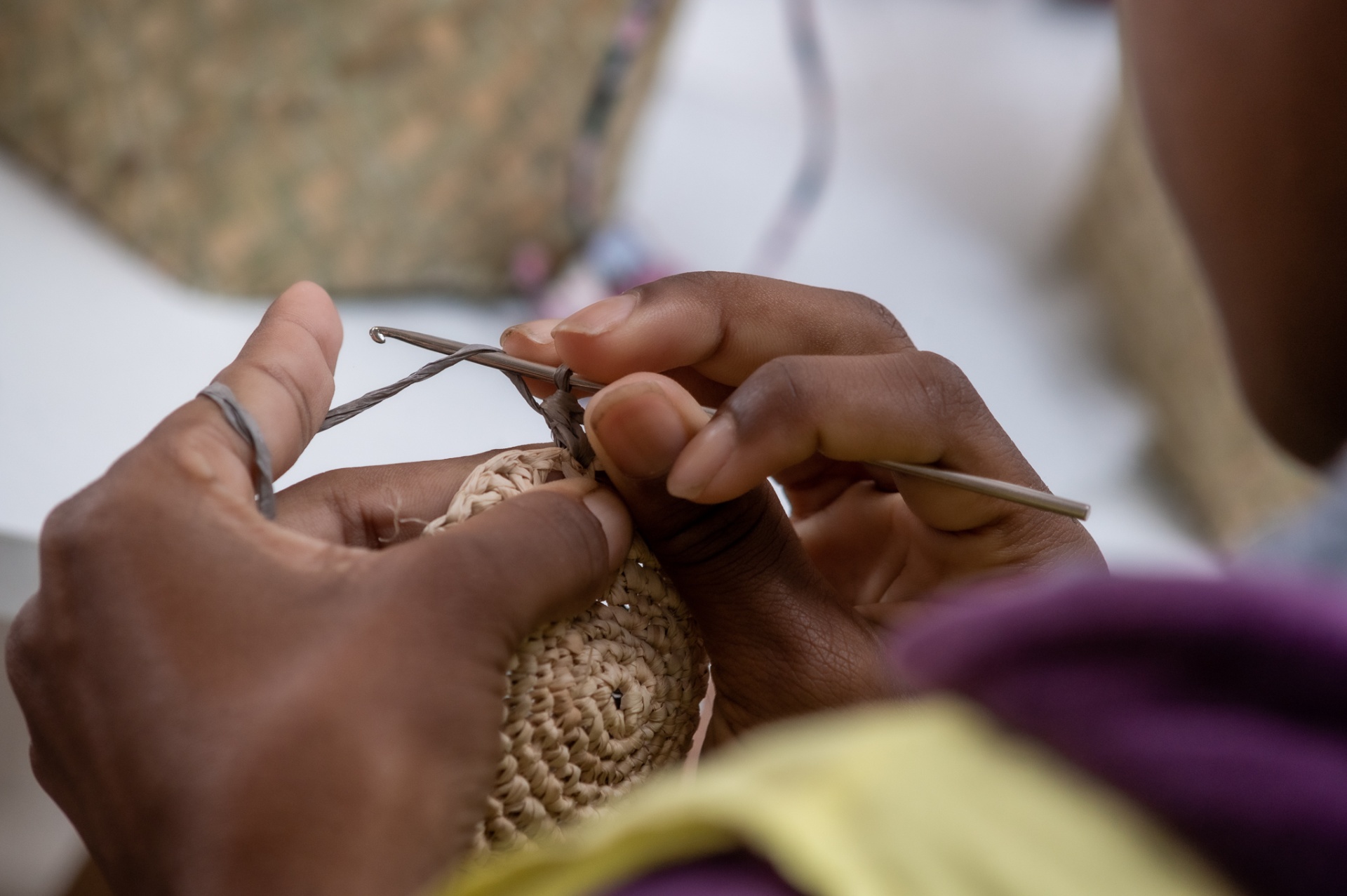
Everything starts with selecting the Raphia farinifera strands. A luxury bag uses only first-harvest fibres, 1.2 to 1.5 m long, calibrated in three thicknesses: fine for tight woven bodies, medium for patterns, wide for handles and reinforcements. Brittle or stained strands are removed upstream — a sort that can discard up to 30 % of the raw material but governs the final regularity of the weave.
2. The weave: density and tension
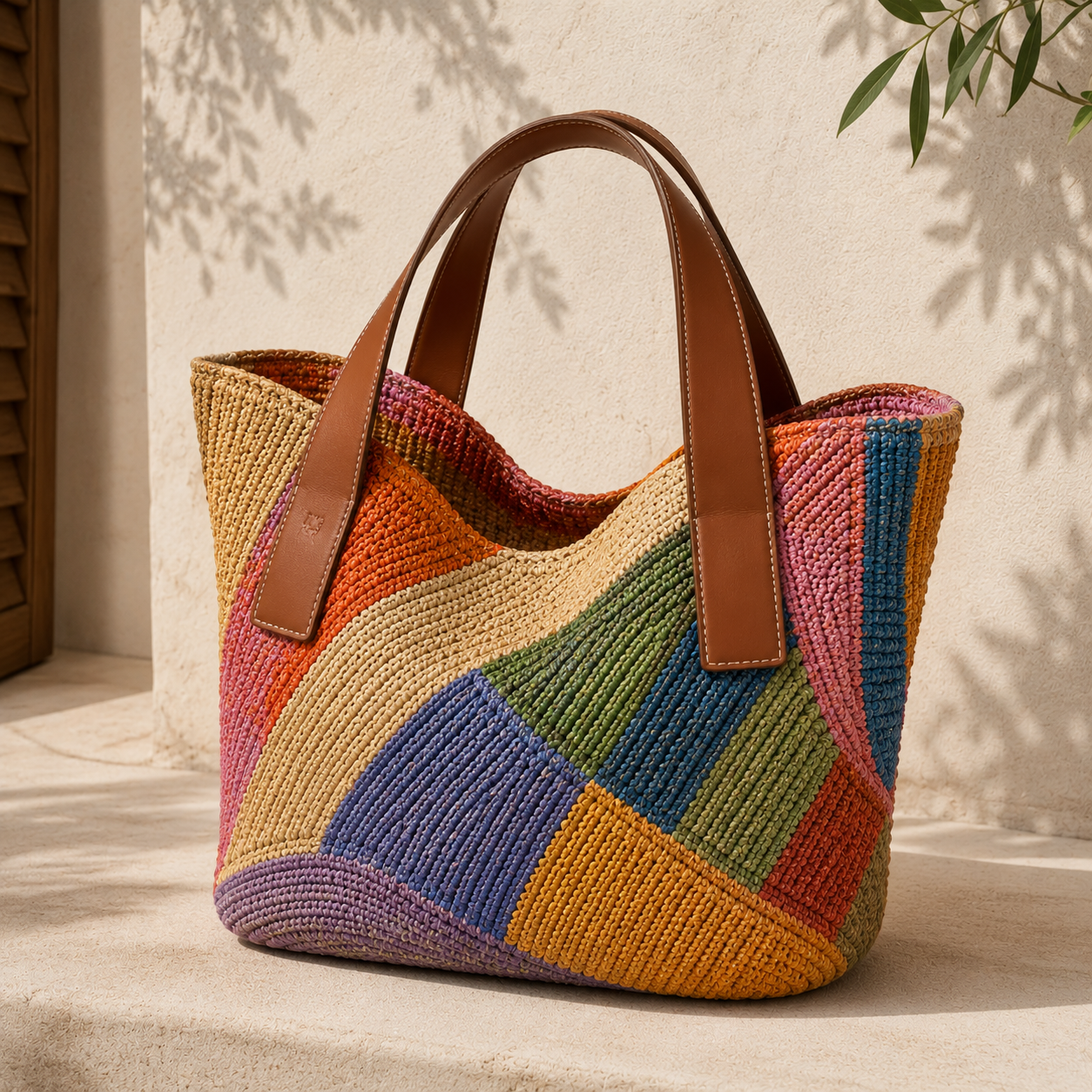
- Tight diagonal weave (structured bodies) — 12 to 14 strands/cm, holds shape without internal frame.
- Mat weave (clutches, bases) — flat surface, ideal for embroidery or embossed branding.
- Open chequerboard weave — summer pieces, lightens the bag without losing structure.
- Textured weave (waffle, twill) — editorial runs, plays with light and shadow.
3. The invisible internal reinforcements
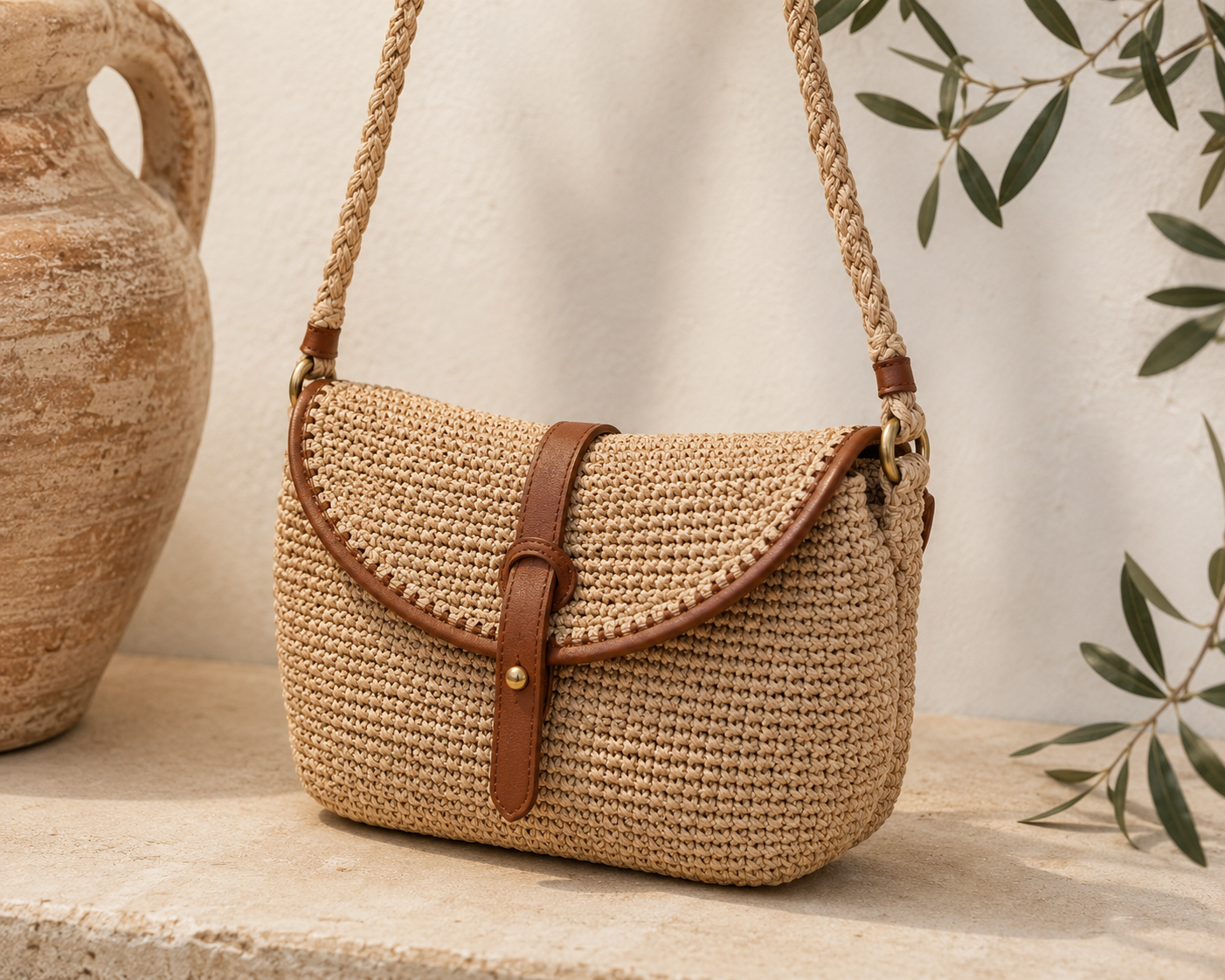
A luxury raffia bag keeps its shape thanks to internal reinforcements that stay hidden: fusible organic cotton interlining at the corners, full-grain leather bands stitched along the top edges, rigid wood-board base finished with a leather sole. These elements double the bag's useful life and prevent handle sagging — the main flaw of low-end raffia bags.
4. The lining: an immediate quality signal
Three standards coexist on the luxury raffia market: tightly woven organic cotton (most common, neutral and durable), ecru linen (for natural positionings, more breathable), viscose or silk satin (on event pieces, more delicate). The lining is always set on a support canvas to prevent distortion and closed with a folded seam, never overlocked. An interior leather-trimmed zip pocket has become the tacit standard for fashion houses.
5. Leather finishings and hardware
Handles, loops, corner reinforcements, closure flap: leather signs the bag as much as the raffia itself. SOBIKA works with vegetable-tanned full-grain leathers sourced from certified tanneries (LWG or equivalent), hand-stitched with waxed linen thread. Hardware is brass-finished or plated, and can be engraved with the client house's logo. On limited editions, rivets are set with a manual press to preserve the exact angle of the underlying weave.
6. What separates a luxury bag from a premium bag
- Weave regularity across the entire surface, including under the flap and on the base.
- Hand-stitched leather, never glued, with regular saddle stitch (8 to 10 stitches/cm).
- Lining set without folds or tension, folded seams invisible.
- Engraved hardware and consistent patina across all metal parts.
- Rigid base that keeps the bag upright even when empty, with no tipping.
Sourcing a luxury raffia bag: what to specify
For design offices briefing a maker: specify weave density (strands/cm), the exact leather (origin, tanning, thickness in mm), lining type and weight, hardware finish, and require a physical prototype before series launch. SOBIKA supports these steps in 3 to 4 weeks, with a full material file and archived colour matches for cross-season reproduction.
A luxury raffia bag reveals itself by touch in three seconds: body firmness, leather softness, silent hardware. Everything else is marketing.
Read next