Silhouettes, crochet stitches, palette and runway signals: what the spring-summer 2026 shows tell us about the raffia season to come in summer 2027.
Raffia no longer really has an off-season. For three summers it has settled into the wardrobes of major Parisian and Milanese houses, moved beyond beach baskets and become a runway material in its own right. The spring-summer 2026 season, carried by a wave of much-discussed designer debuts in Paris and Milan, confirmed that shift: raffia is now handled like a plant-based leather — sculpted, dyed, paired with metal, slipped under knits. These signals let us read, ahead of time, the trends that should shape summer 2027. Here is our take, from the vantage point of a Madagascar workshop that produces a significant share of the crocheted raffia bags carried by European fashion houses.
Raffia, the signature material of a 'quiet craft' decade
The editorial thread running through spring-summer 2026 collections is clear: a return to hand-work, to a raw legible material, to accessories that visibly 'tell' their making. Vogue and Harper's Bazaar treat it as one of the pillars of their accessory forecasts for the season. The French press even talks of 'raffia mania' (L'Officiel, Culturefemme, Luxe Tentations). Our read: this groundswell will not stop at SS26. If anything, it should refine itself for summer 2027, with more constructed silhouettes, a denser hand and more elevated finishes.
Five silhouettes to watch for summer 2027
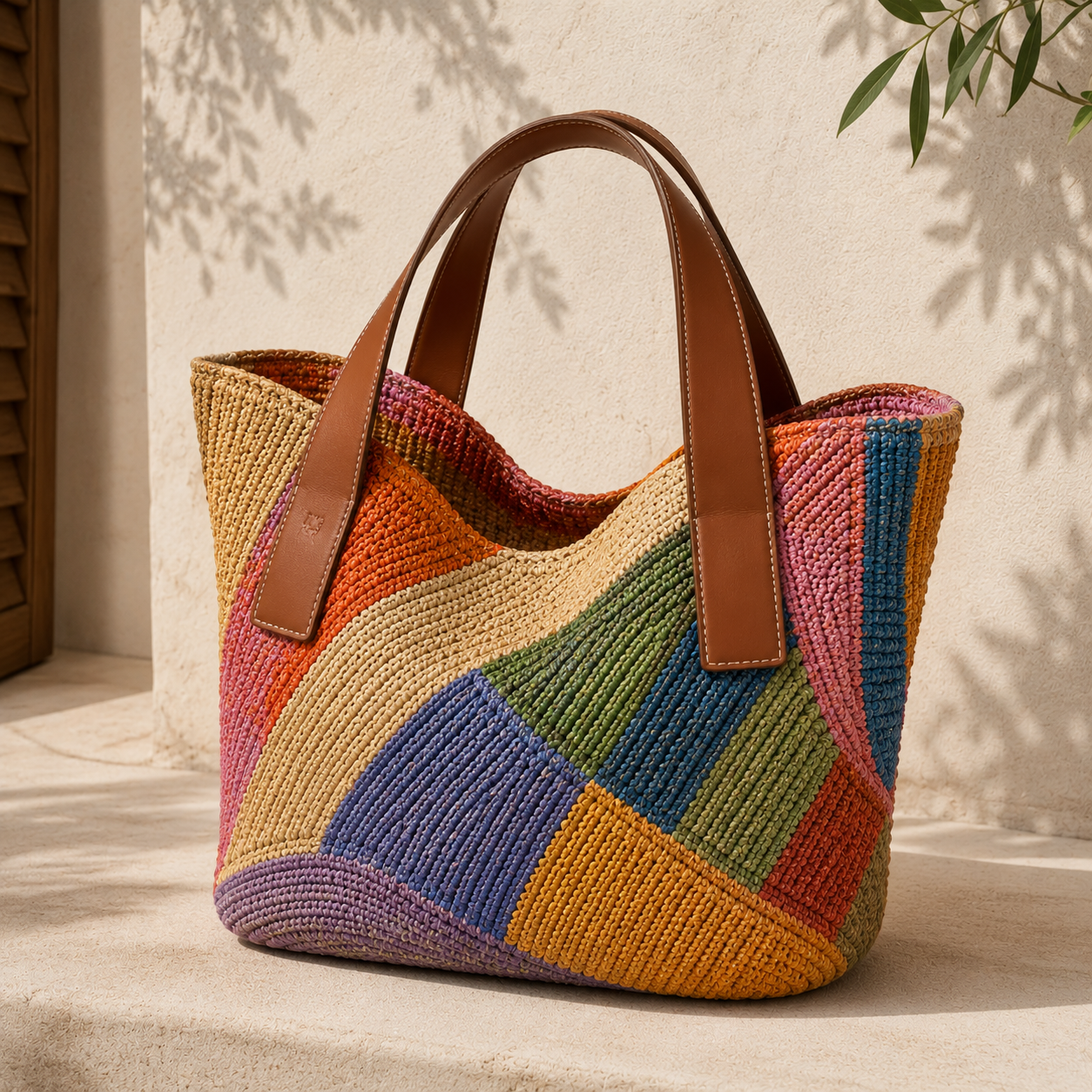
- The architectural tote: XL format, stiffened body, tightly braided handles. It succeeds the soft tote of 2024-2025 and becomes a genuine urban day bag.
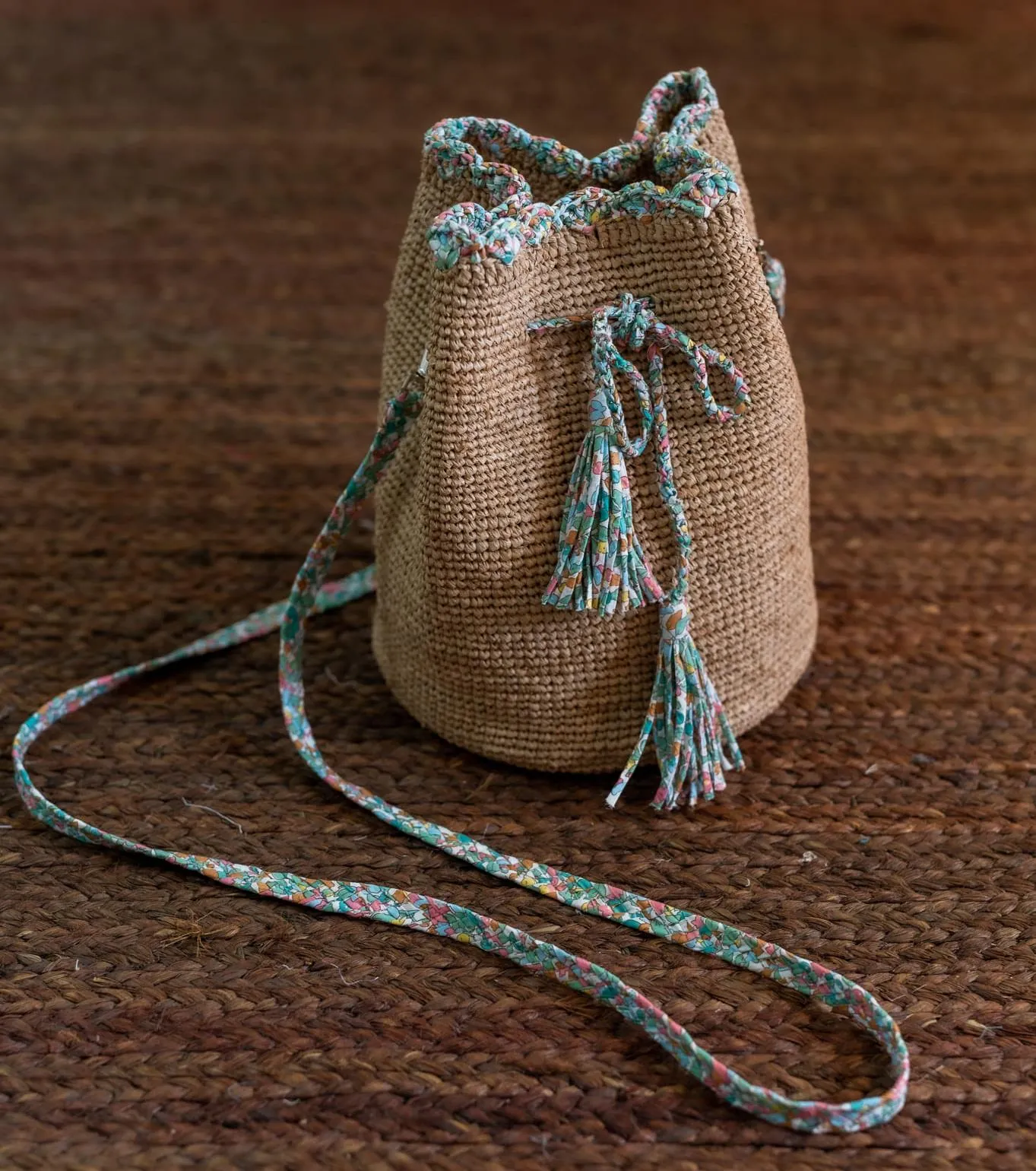
- The revisited bucket: elongated proportions, structured base, braided-leather drawstring. A shape that showcases tight flat crochet.
- The sculptural mini pouch: small format, ovoid or shell-like shapes, often crocheted in a single piece. Ideal for evening pieces and capsule editions.
- The confidently oversized beach carrier: very open-weave, with a removable canvas liner. Back to the basket roots, but with premium finishing standards.
- The crocheted raffia belt bag / hip bag: the least obvious SS26 novelty, but with strong commercial potential for SS27 in the 20-35 segment.
Techniques: crochet moves upmarket, weaving gets denser
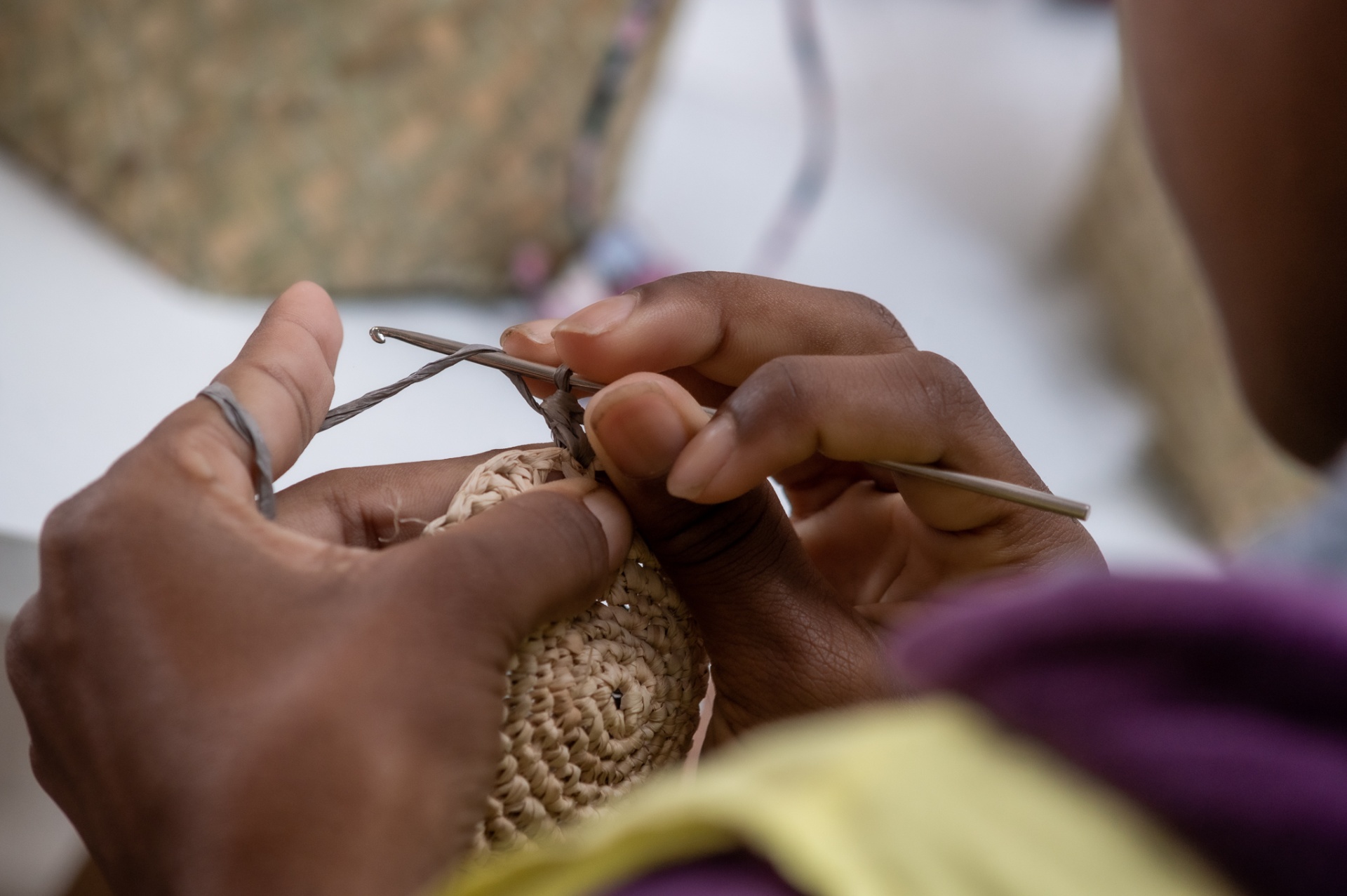
Three technical shifts stand out clearly from the SS26 collections and are likely to carry into SS27. First, a tighter crochet with nearly invisible stitches, visually bringing raffia close to a grained leather. Second, the return of textured stitches — waffle, honeycomb, cable — used as material accents on otherwise very sober bag bodies. Third, growing raffia-leather hybridisation: handles, reinforcements, loops and full-grain leather bases, often hand-finished. This last shift is very favourable to artisan workshops able to handle both materials on the same line, as we do.
The 2027 palette: calibrated naturals, gourmand tones, burnt contrasts
Undyed natural raffia remains central — but with tighter calibration: minimal tone variation, strands sorted by thickness, light bleaching on selected pieces. Alongside, three colour families clearly emerge from the collections shown in Paris, Milan and New York:
- Gourmand and solar tones: turmeric yellow, apricot orange, lychee pink — obtained through natural dyeing from local ingredients (hibiscus, turmeric, indigo for the base tones).
- Brown naturals: sand, clay, light cocoa, in solids or soft gradients — perfect for architectural silhouettes.
- Burnt contrasts: deep bordeaux, tobacco brown, matte black obtained through sequenced plant-based dyeing. Used in small accents or as bag bodies for the formal-day segment.
Raffia beyond bags: hats, belts, mules, décor
Another notable shift in SS26 collections: raffia is stepping outside bags. It is showing up in reworked wide-brim hats, in braided belts worn high over linen dresses, in platform mules and hand-braided sandals. On the home side, raffia is entering upmarket décor — pendant lights, trays, baskets released in limited runs. This adjacent market, still fragmented, opens diversification opportunities for SS27 to brands already established in bags.
Sustainability and sourcing: Madagascar remains the reference
Raphia farinifera, a palm harvested in Madagascar, yields the longest, most supple and most regular fibre on the world market. It is this regularity that enables the tight stitches called for by the SS26-SS27 trends. Sourcing from Madagascar also carries a favourable environmental profile: the fibre is harvested without felling the palm, air-dried, dyed with natural ingredients (indigo, hibiscus, turmeric) and hand-worked in the producing regions. At the SOBIKA workshop, every offcut is reintegrated as patchwork or small pieces, in a zero-waste approach aligned with our clients' specifications.
What this changes for an SS27 brief
For a design office preparing an SS27 collection built on raffia, our operational recommendation is simple: frame three axes at brief stage. One, the target crochet density (stitches/cm) and matching strand calibre, with signed samples. Two, the colour strategy — split between undyed naturals, gourmand tones and burnt contrasts — validated with an archived physical swatch book. Three, the leather-hybridisation strategy: origin, tanning, thickness, finishing. On this basis, a physical prototype in under four weeks avoids most of the back-and-forth during industrial cycles — and secures clean delivery for the March-May 2027 commercial window.
Raffia is no longer a seasonal material: it's a collection axis in its own right. Summer 2027 will be the season it truly becomes an urban bag material, not just a holiday one.
Press sources consulted for this article: Vogue ('The Key Summer 2026 Handbag Trends'), Harper's Bazaar UK ('The 10 spring/summer 2026 bag trends'), L'Officiel Belgium, Culturefemme, Luxe Tentations, Soigné Middle East. SS27 projections reflect our editorial reading and do not anticipate any specific upcoming collection.
Read next